My entire worldview just shifted, and I need to share.
While researching bioregional-scale regenerative economies, I learned something absolutely mind-boggling. I intuitively knew this truth; I just did not realize how extreme it was.
The Comparison That Changed Everything
I was comparing human-designed food production systems versus systems designed by humans working with animals, microbiology, and natural processes.
The Mind-Blowing Discovery
🇺🇸 US Food Production: Past, Present & Future
💡 The Shocking Truth: A single tree species (American Chestnuts), in only half the US, taking up ZERO farmland, provided 9-12 TIMES MORE food than ALL the food the US currently produces with ALL our technology and industrial agriculture! Way more than anyone could possibly eat!
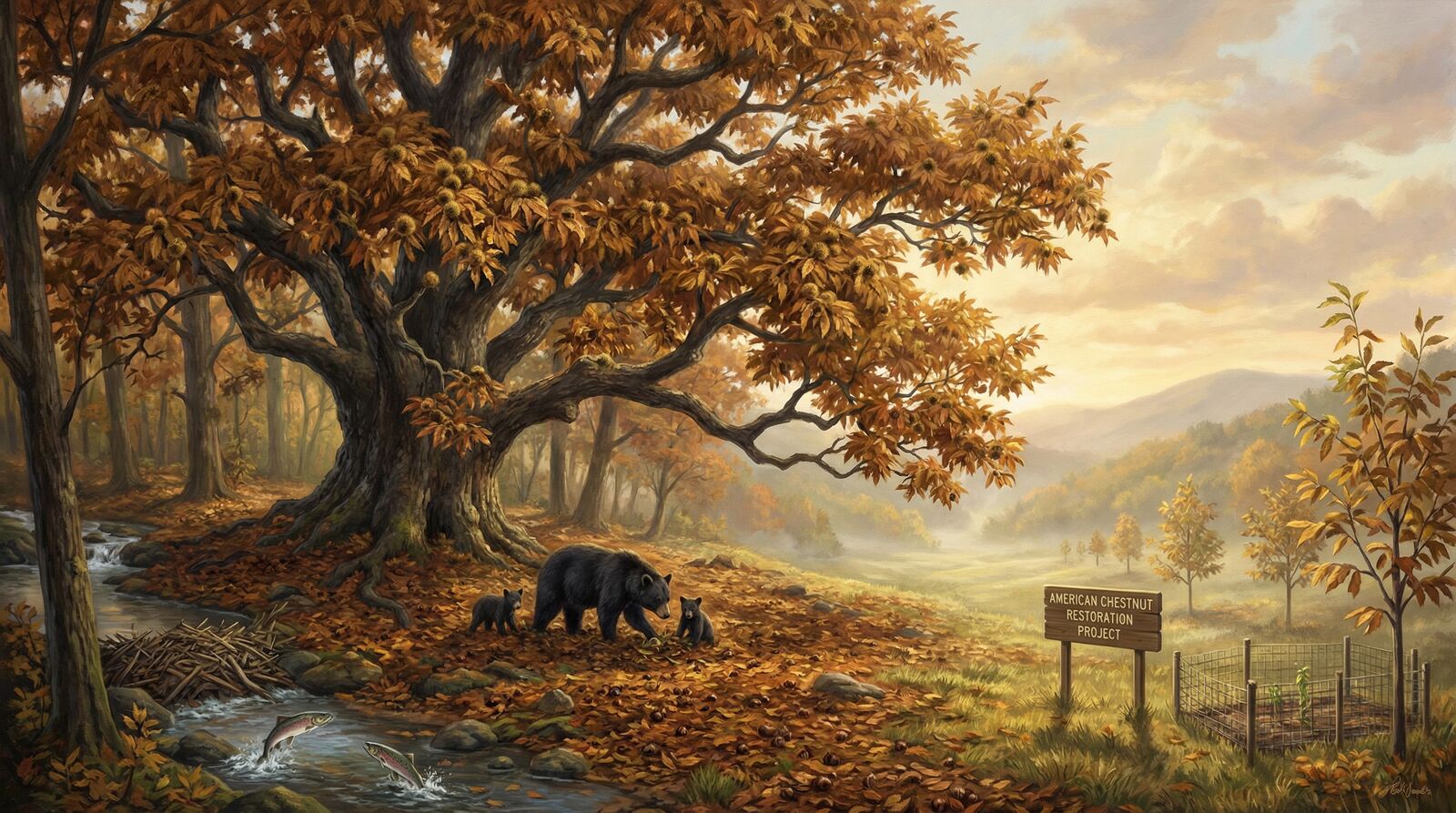
What really blew my mind was learning that a single mature American Chestnut Tree (which used to dominate the forests of Eastern US) produces around 3,000 pounds of chestnut fruit per acre. These chestnuts are an incredibly nutritious and complete food source.
Then I learned there were once 3-4 BILLION of these trees in US forests.
I did the math. I had to do it three times to verify.
And this is before we even consider the oaks (acorns), paw paws (an epic mango-like fruit), and hundreds of other food-producing species thriving in these ancient forests.
What Happened?
There are fewer than 10,000 Great American Chestnut trees alive today. How did we go from 4 billion to near extinction?
The Salmon: We dammed the rivers and stopped the salmon from bringing ocean nutrients (like nitrogen, which fruiting plants need) deep into forests. Native Americans said the salmon were once "so numerous you could cross the river on their backs."
The Beavers: We hunted them for their fur (colonizers loved those fancy fur hats). This stopped them from managing the water cycles. Beavers created slower, flatter water terrain that allowed salmon to travel even deeper into forests, meadows, and landscapes. Population then: 300+ million. Population now: fewer than 13 million.
The Bears: We hunted them for their skin, flesh, sport, and because we saw them as competition (eating "our" salmon!). This stopped them from carrying salmon deep into the forests from the rivers and nurturing those chestnut trees. Bears are natural food foresters, and they do an epic job! If a bear can eat it, we can too. Population then: 2+ million. Population now: fewer than 300,000.
The Whales, Deer, Foxes, Eagles, Birds: So many others came together to co-create food abundance and ecosystem health.
🌍 Working With Nature's Abundance Creators
What would it be like to work with a wide diversity of animals to create abundance for all?
| Species | THEN (Pre-Industrial) | NOW (Current) | FUTURE (Regenerative) |
|---|---|---|---|
🐻Bears | 2+ Million | <300k | Thriving Partners |
🦫Beavers | 300+ Million | <13 Million | Water Guardians |
🐟Salmon | Abundant | Endangered | Nutrient Carriers |
🌰Chestnuts | 3-4 Billion Trees | <10k Trees | Food Forests |
🌟 The Regenerative Vision: Imagine a future where we partner with bears as food foresters, beavers as watershed engineers, salmon as nutrient distributors, and chestnuts as abundance providers. Together, we can co-create ecosystems where every species thrives and abundance flows naturally. This is not a dream, it is a possibility waiting for us to remember how to be good partners with nature.
The Truth We Already Knew
The abundance of nature, with her billions of years of technological evolution, does a better job than our few centuries of "progress."
Nature is billions of years of perfected evolution. Human egos like to think they know best, but they do not, and then trillions of beings pay for it. Half of all life has disappeared since industrialization. This is proof positive that humans do not know what they are doing and should be looking to nature to see how things should be done.
The Hope
Here is the beautiful part: restoration is possible. The American Chestnut Foundation and other organizations are working to bring back blight-resistant chestnuts. Beaver reintroduction programs are restoring watersheds. Salmon runs are being revived.
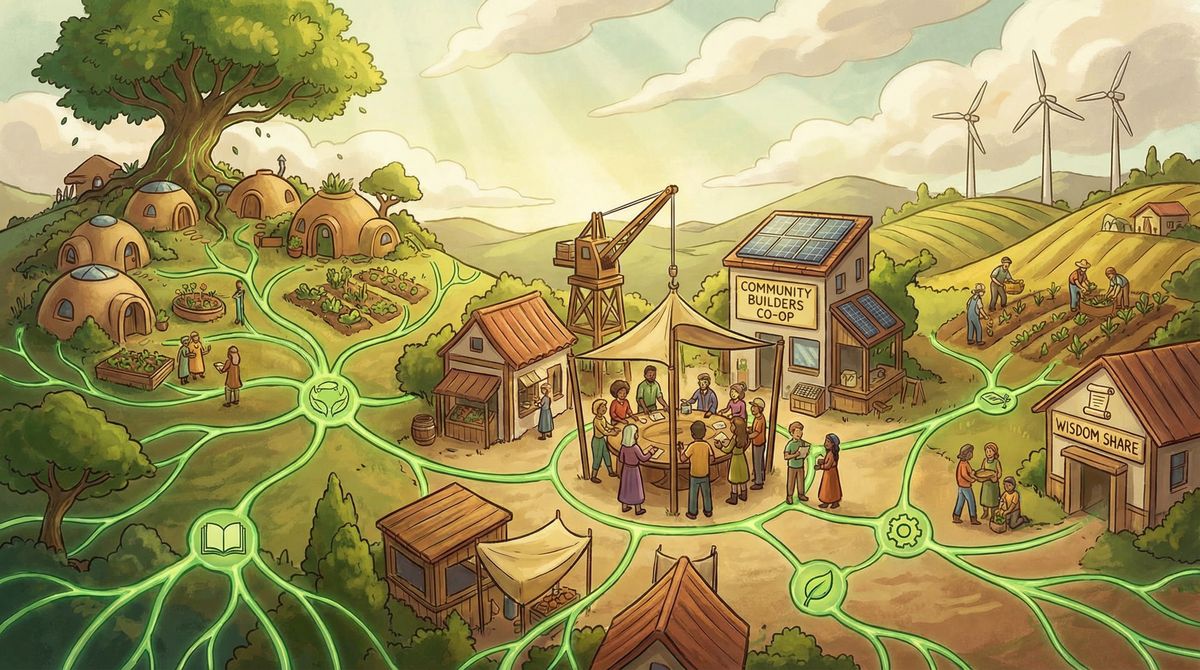
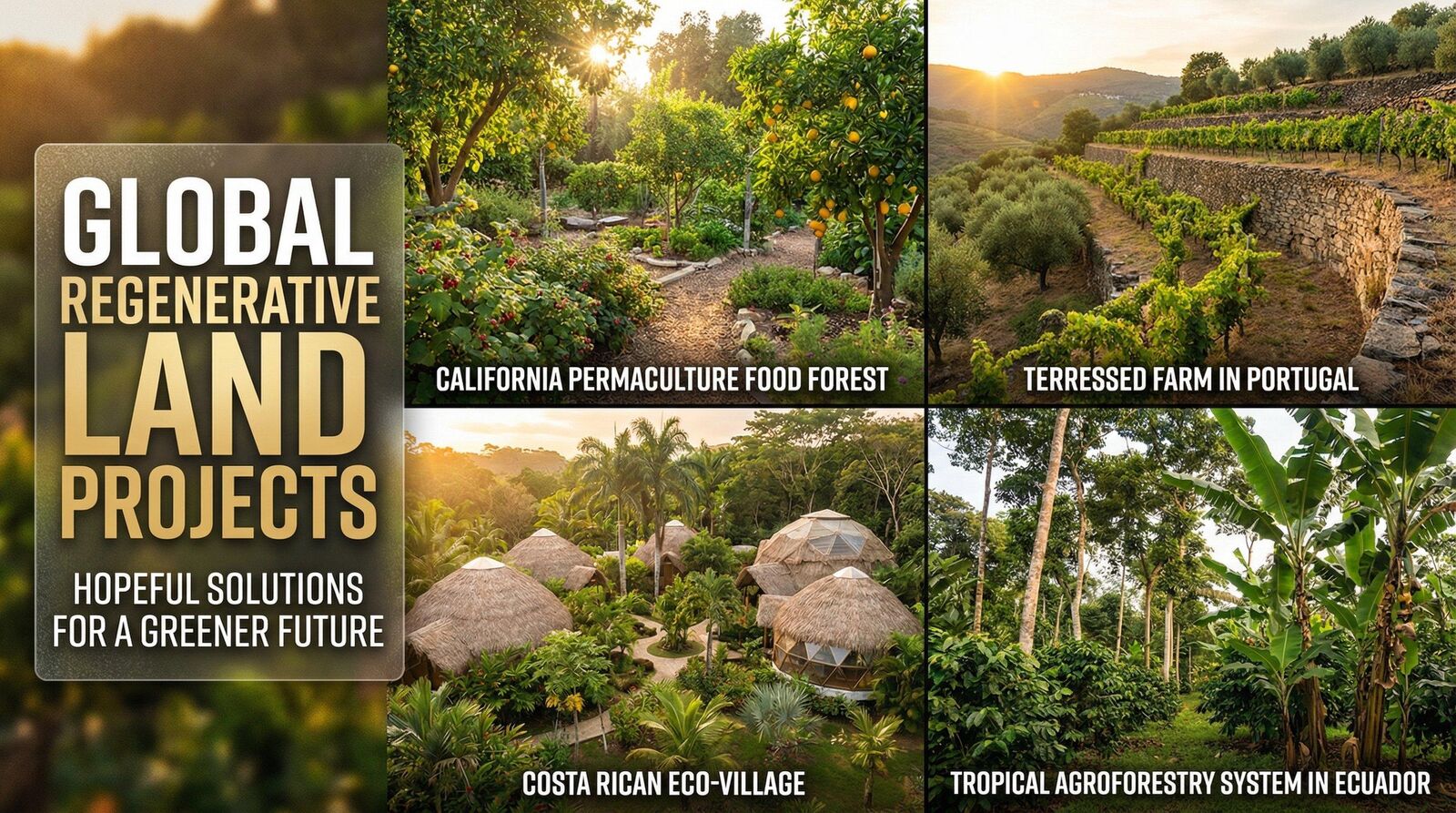
And regenerative land projects, like those in the ReGen Civics alliance, are demonstrating that humans can work WITH nature instead of against it.
What This Means for ReGen Civics
This is why we do what we do. Every land project in our alliance is working to restore the kind of abundance that once existed naturally. Not through more technology and control, but through partnership with the living systems that know how to create abundance.
We are not alone in our quest to heal Earth. The salmon, the beavers, the bears, the chestnuts, they are all waiting for us to remember how to be good partners.
The question is not whether we CAN restore abundance. The question is whether we WILL.
Then vs Now: - Bears: 2 Million+ THEN, fewer than 300k NOW - Beavers: 300 Million+ THEN, fewer than 13 Million NOW - Salmon: Abundant THEN, Endangered NOW - Chestnut: 3-4 Billion THEN, fewer than 10k NOW (Near Extinction)
The seeds of restoration are already planted. Will you help them grow?